This glossary is related to the brain research topic.
Used articles:
[Sanei & Chambers, 2021] Sanei, S. & Chambers, J.A. (2021). EEG Signal Processing and Machine Learning (2nd ed.) (ISBN 13: 9781119386940, ICCN: 2021003276). Wiley. https://books.google.de/books?id=KLEVMQAACAAJ
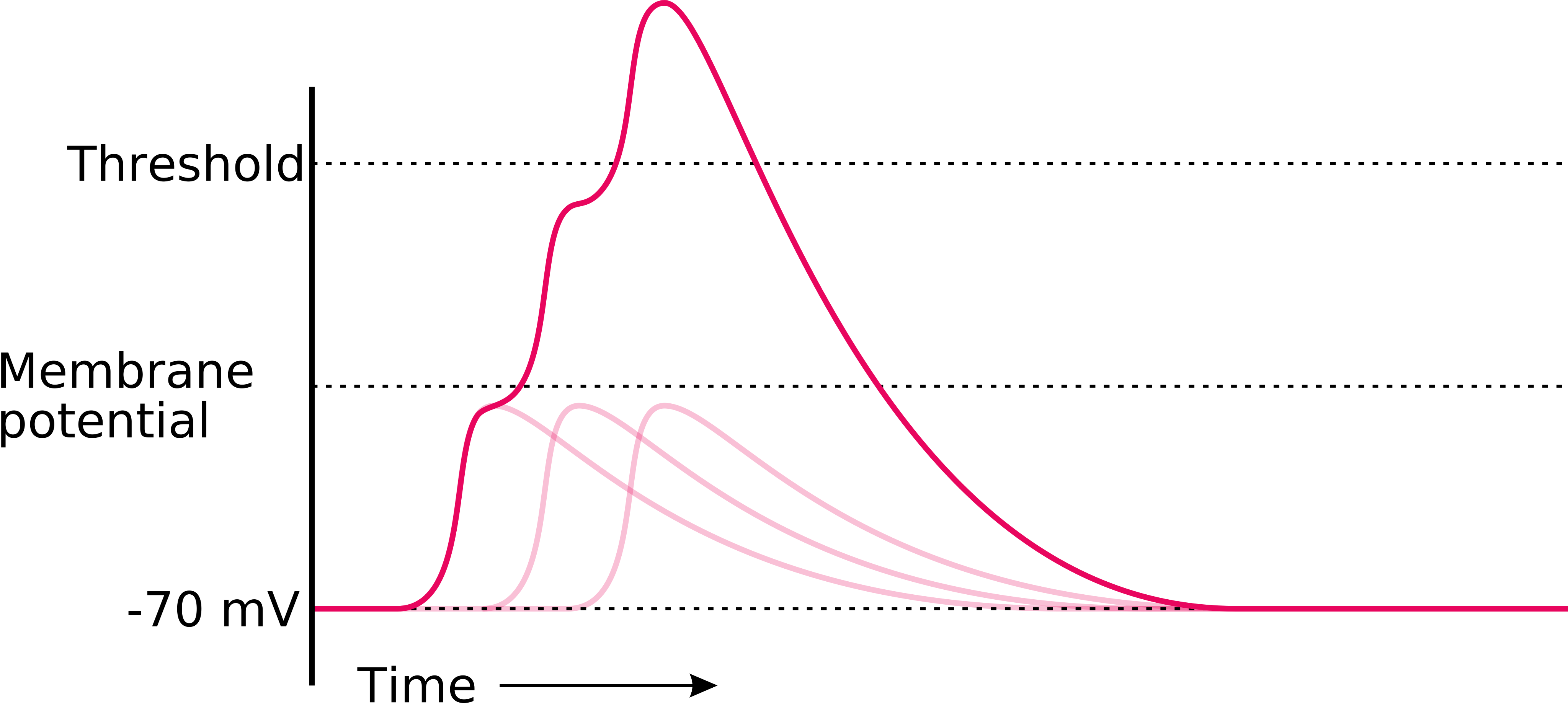
action current
noun
An electric current arising from a variation of potential occurring during activity in living tissue (such as a muscle or nerve).
Example: The concept of action current was introduced by Hermann Von Helmholtz.
ru: ток действия, биоток
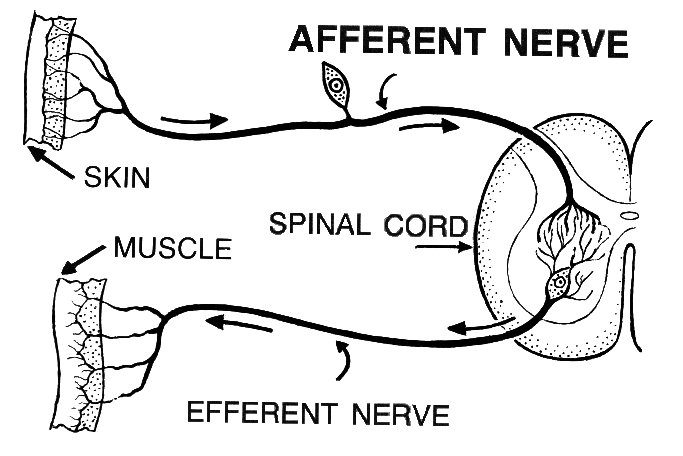
afferent
adjective
Conducting or conducted inwards or towards something (for nerves, the central nervous system; for blood vessels, the organ supplied).
Example: The resultant Ca 2+ influx mediates the release of the excitatory AFFERENT transmitter, glutamate and or another compound that can excite glutamate receptors on the primary AFFERENT neurons 7.
ru: Афферентные - нейронные сигналы, поступающие от сенсорного органа в мозг. Входящая сенсорная информация.
amplifier
noun
An electronic device for increasing the amplitude of electrical signals, used chiefly in sound reproduction.
Example: In order to reach the appropriate voltage level, an AMPLIFIER must be designed with a gain of 100-1000 engineering.
ru: Усилитель
attenuate
verb
Reduce the force, effect, or value of.
/əˈtɛnjʊeɪt/
Example: The skull attenuates the signals approximately one hundred times more than the soft tissue.
ru: ослаблять, смягчать
attenuation
noun
The process of making something less or weaker.
Example: Very delicate needle-type electrodes can avoid the attenuation and nonlinearity effects induced by the skull.
ru: Затухание
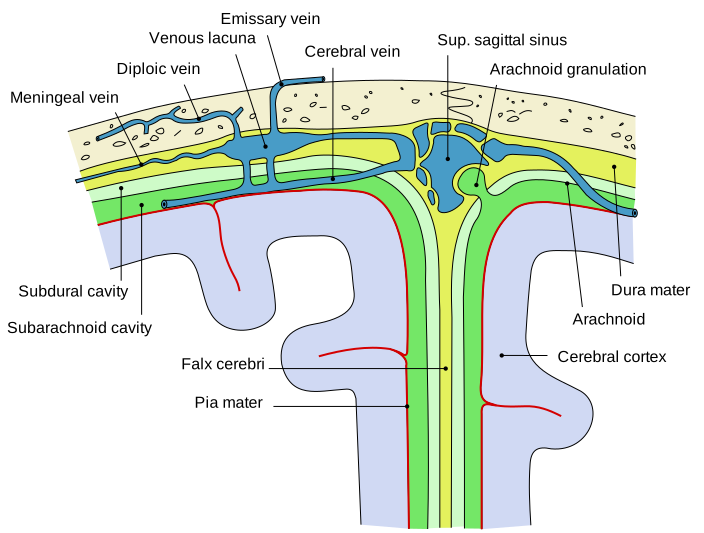
cavity
noun
/ˈkæv.ə.ti/, the space between two surfaces
Example: Between the arachnoid and pia mater lies the subarachnoid cavity.
ru: полость
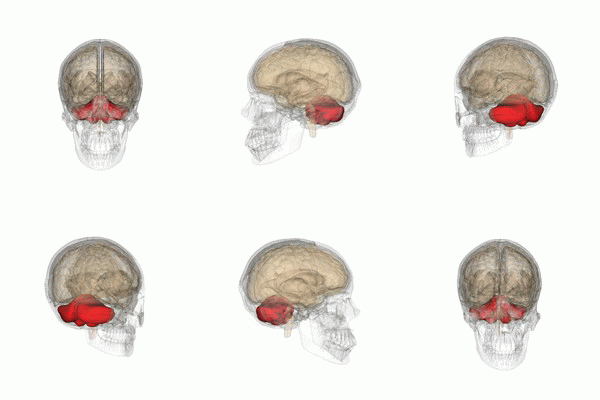
cerebellum
noun
The part of the brain at the back of the skull in vertebrates, which coordinates and regulates muscular activity.
plural noun: cerebella; cerebellums
/ˌsɛrɪˈbɛləm/
Example: From an anatomical point of view the brain may be divided into three parts: the cerebrum, cerebellum, and brain stem.
ru: мозжечок
cerebrum
noun
The principal and most anterior part of the brain in vertebrates, located in the front area of the skull and consisting of two hemispheres, left and right, separated by a fissure.
noun: cerebrum; plural noun: cerebra
/sɪˈriːbrəm,ˈsɛrɪbrəm/.
Example: From the point of view of biological continuity, I am a human animal, and when my CEREBRUM is transplanted I simply lose an organ and the capacities that depended on that organ - it is analogous to losing a kidney.
ru: большой мозг
conduction
noun
1) Transmission through or by means of a conductor.
2) The transmission of excitation through living tissue and especially nervous tissue.
Example: The conduction velocity of APs lies between 1 and 100 ms^−1.
ru: проводимость
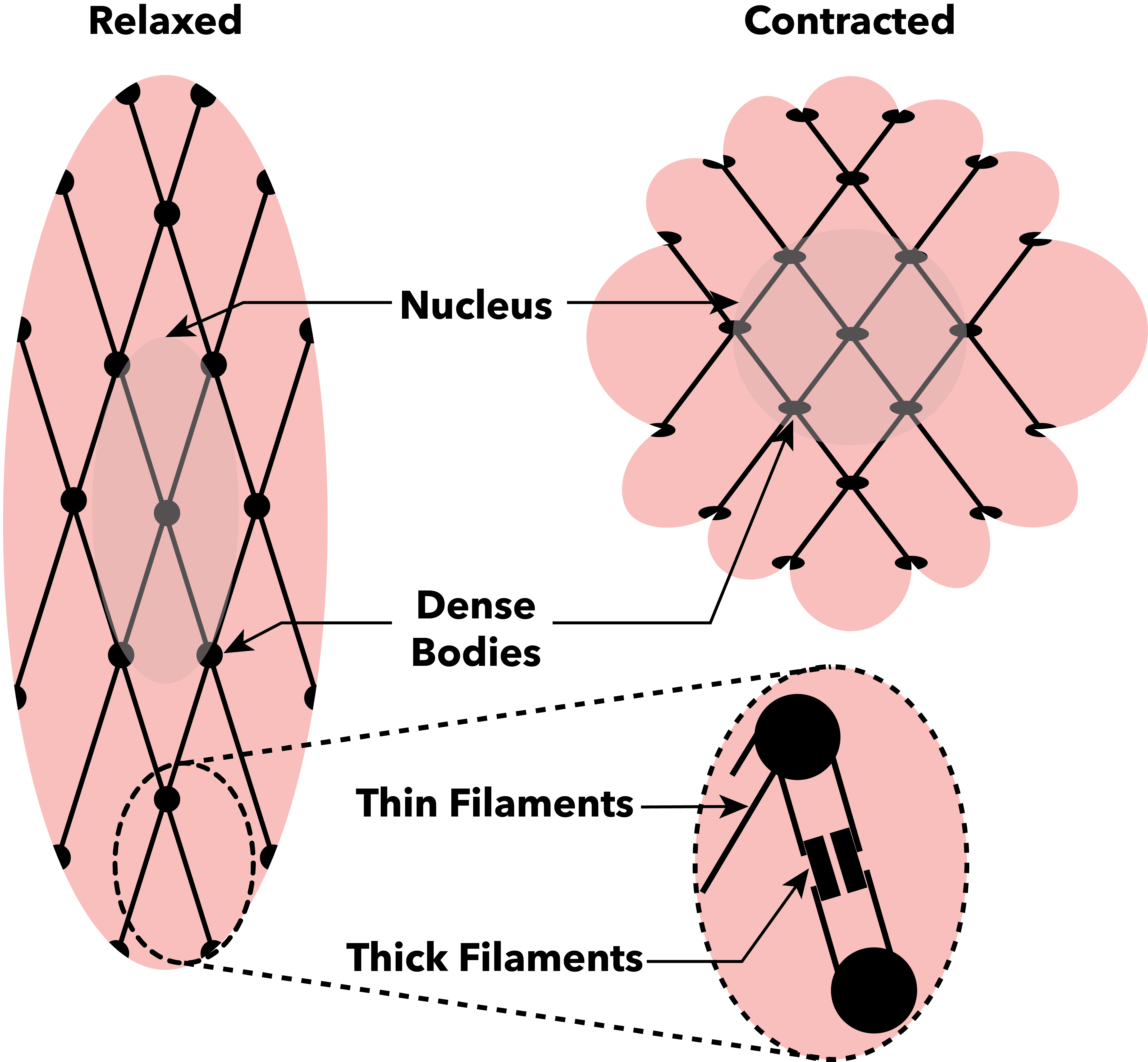
contraction
noun
The process in which a muscle becomes or is made shorter and tighter.
Example: Helmholtz confirmed the negative variations occurring during muscle contraction by measuring the speed of frog nerve impulses in 1849.
ru: сокращение
convoluted
adjective
Extremely complex and difficult to follow.
/ˈkɒnvəl(j)uːtɪd,ˌkɒnvəˈl(j)uːtɪd/
Example: The cerebrum consists of both left and right lobes of the brain with highly convoluted surface layers called the cerebral corte.
ru: запутанный, извилистый
disturbance
noun
A state in which normal mental or physical functioning is disrupted.
Example: Then, during 460–379 BCE, Hippocrates discussed and introduced epilepsy as a disturbance of the brain.
ru: нарушение
evidence
noun
The available body of facts or information indicating whether a belief or proposition is true or valid.
Example: Napoleon Cybulski (1854–1919) provided EEG evidence of an epileptic seizure in a dog caused by electrical stimulation.
ru: обоснование, доказательство
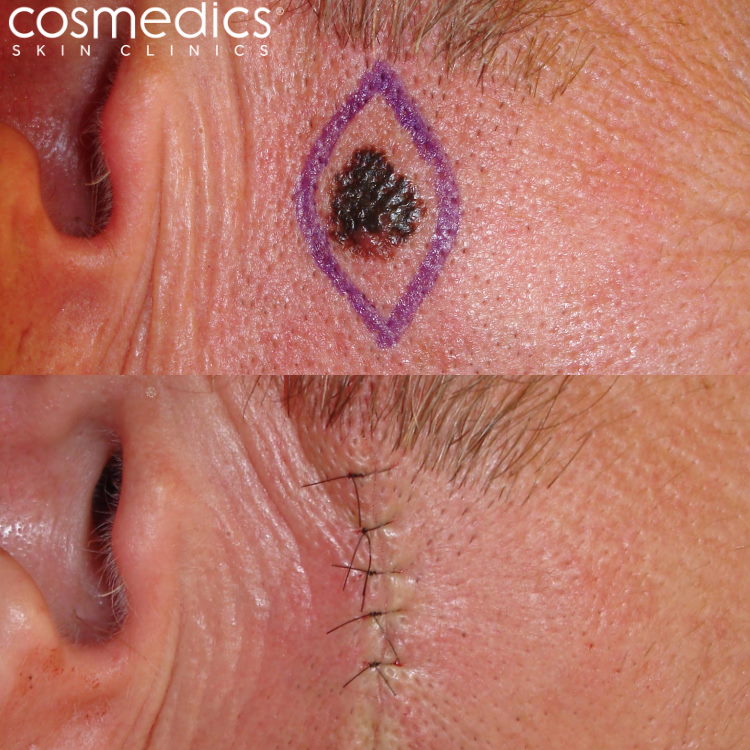
excision
noun
The act of removing tissue, organs, or tumours in an operation.
Example: The acquired EEG signals may be used for assisting in experimental cortical excision of the epileptic focus.
ru: иссечение, удаление, вырезание
excitation
noun
The act of being exciting
Example: In this investigation we used a Phillips Generator that used EXCITATIONS in a copper x-ray tube to produce the beam.
ru: Возбуждение
excitatory
adjective
Exhibiting, resulting from, relating to, or producing excitement or excitation.
/ɪkˈsaɪtətərɪ/
Example: If an action potential (AP) travels along the fibre, which ends in an excitatory synapse, an excitatory post-synaptic potential (EPSP) occurs in the following neuron.
ru: возбуждающий (сигнал в организме)
fatigue
noun (unc)
/fəˈtiːɡ/,
a feeling of being extremely tired, either mentally or physically
Example: EEG signals' variations can represent the brain performance in the cases of mental fatigue, learning, and memory load.
ru: Усталость
foci
noun (plural form of focus)
The centre of interest or activity.
Example: W. Gray Walter discovered the foci of slow brain activity (delta waves).
ru: очаги
hypercapnia
noun
A condition of abnormally elevated carbon dioxide (CO2) levels in the blood.
Example: A combination of EEG and DC potentials is often observed for some abnormalities
in the brain such as seizure (induced by pentylenetetrazol), hypercapnia, and asphyxia.
ru: гиперкапния
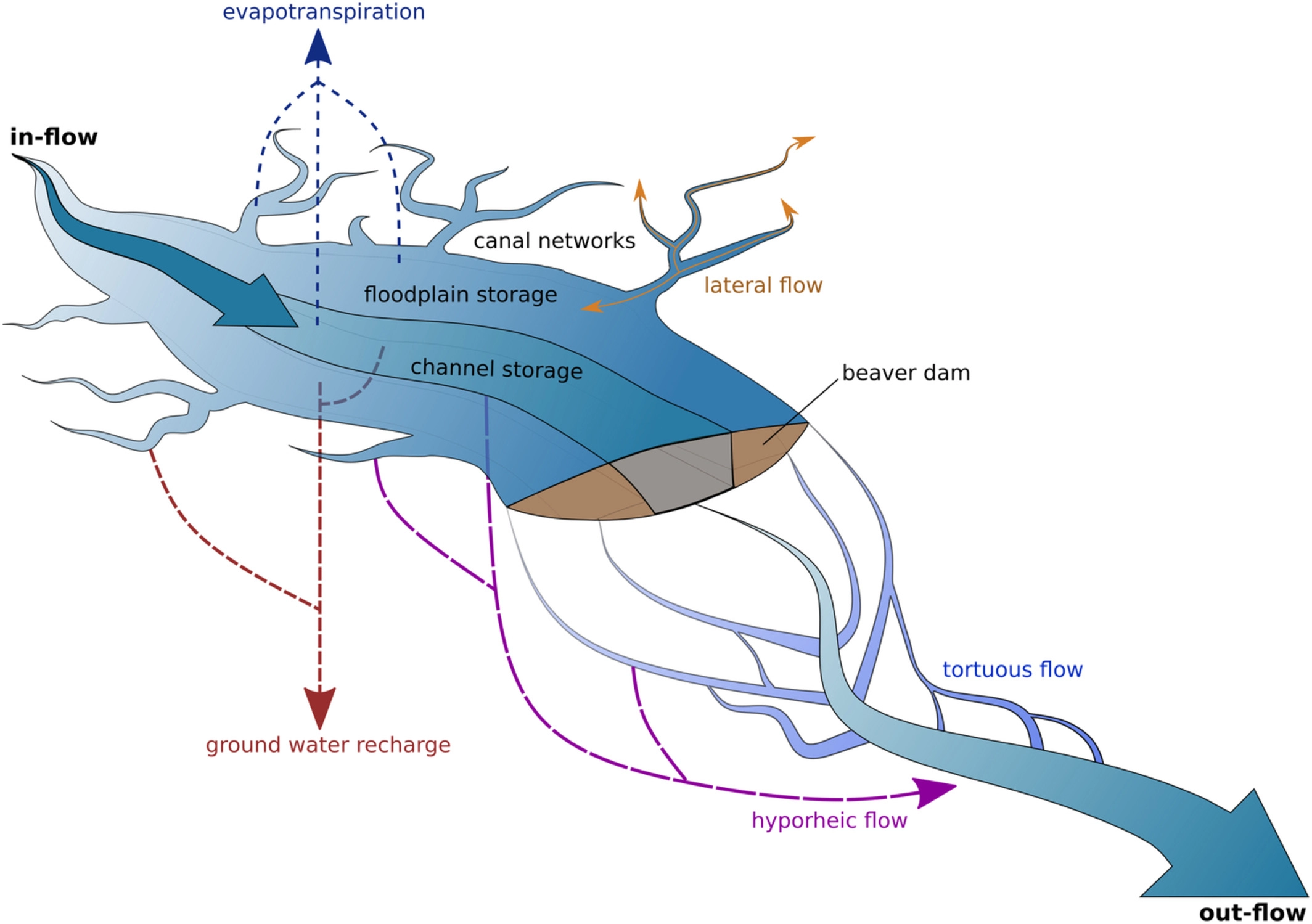
inflow
noun
The movement of liquid or air, a large number of people or things or a large amount of money into a place.
UK /ˈɪn.fləʊ/ US /ˈɪn.floʊ/
Example: Also, the average inflow of patients remained constant at 4 % after the introduction of the fee.
ru: приток чего-либо
inhibitory
adjective
With the effect or function of inhibiting (= stopping or slowing down) a process.
UK /ɪnˈhɪb.ɪ.tər.i/ US /ɪnˈhɪb.ɪ.tɔːr.i/
Example: If the fibre ends in an inhibitory synapse, then hyperpolarization will occur, indicating an inhibitory postsynaptic potential (IPSP).
ru: тормозящий, замедляющий
intact
adjective
Untouched especially by anything that harms or diminishes, having no relevant component removed or destroyed.
Example: Pravdich-Neminsky recorded EEG from the brain, termed the dura, and the intact skull of
a dog in 1912.
ru: нетронутый
involuntary
adjective
Done without a will or conscious control.
/ɪnˈvɒlənt(ə)ri/
Example: The brain stem controls involuntary functions.
ru: непроизвольный, ненамеренный
junction
noun
A point where two or more things are joined.
Example: The activities in the CNS are mainly related to the synaptic currents transferred between the junctions (called synapses) of axons and dendrites, or dendrites and dendrites of cells.
ru: Соединение, перекрёсток
manifestation
noun
A sign of something existing or happening.
UK /ˌmæn.ɪ.fesˈteɪ.ʃən/ US /ˌmæn.ə.fesˈteɪ.ʃən/.
Example: The clinical experts in the field are familiar with the manifestation of brain rhythms in the EEGs.
ru: проявление
obscure
adjective
Not clear and difficult to understand or see.
Example: The exact neurophysiological mechanisms remain obscure.
ru: смутный, туманный
overshoot
verb
1) To pass swiftly beyond.
2) To shoot or pass over or beyond so as to miss
Example: The repolarization typically overshoots the resting potential to a level of approximately −90 mV.
ru: превышать, превзойти что-то
paresis
noun
A condition of muscular weakness caused by nerve damage or disease; partial paralysis.
Example: Berger showed a few examples of paroxysmal EEG discharges in a case of presumed petit mal attacks and during a focal motor seizure in a patient with general PARESIS.
ru: парез - неврологический синдром, снижение силы мышц, обусловленное поражением двигательного пути нервной системы или периферического нерва. Сохраняется возможность движений, в отличие от паралича
paroxysm
noun
1) A fit, attack, or sudden increase or recurrence of symptoms (as of a disease): convulsion.
2) A sudden violent emotion or action: outburst.
Example: Berger showed a few examples of paroxysmal EEG discharges.
ru: приступ, выброс
pave the way (for/to smth)
verb
To make it possible for someone to do something or for something to happen.
Example: The study of EEG paves the way for the diagnosis of many neurological disorders and other abnormalities in the human body.
ru: прокладывать путь (к чему-л.)
premature
adjective
Happening or done too soon, especially before the natural or suitable time.
uk /ˈprem.ə.tʃər/ /prem.əˈtʃʊər/ us /ˌpriː.məˈtʊr/.
Example: In the 1960s the analysis of EEGs of full-term and premature newborns began its development.
ru: Преждевременный
seizure
noun
A sudden attack of illness, especially a stroke or an epileptic fit.
Example: The patient had an epileptic seizure.
ru: припадок
somatosensory
adjective
of or relating to sensations that involve parts of the body not associated with the primary sense organs
Example: EEG signals demonstrate the brain responses to audio, visual, and somatosensory excitations.
ru: соматосенсорная система - комплексная система, образованная рецепторами и центрами обработки нервной системы, осуществляющая такие сенсорные модальности, как осязание, температура, проприоцепция, ноцицепция
tumour
noun
A swelling of a part of the body, generally without inflammation, caused by an abnormal growth of tissue, whether benign or malignant.
Example: Other causes of dementia such as tumours also need to be ruled out.
ru: опухоль
vigilance
noun
The action or state of keeping careful watch for possible danger or difficulties.
Example: In Brussels, Fredric Bremer (1892–1982) discovered the influence of afferent signals on the state of vigilance.